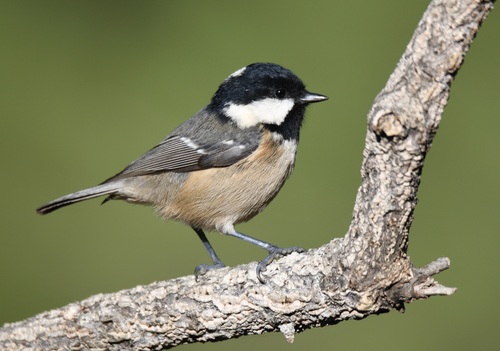
Coal Tit
Periparus ater
A tiny, energetic marvel of the conifer woods, the Coal Tit is easily identified by the bright white patch on its neck. This acrobatic visitor is a master of hiding seeds and a delightful frequent guest at backyard feeders.
Quick Identification
Size
Length: 10-11.5 cm (4-4.5 in); Wingspan: 17-21 cm (6.7-8.3 in); Weight: 8-10 g (0.28-0.35 oz)
Colors
Glossy black cap and throat with distinctive white cheek patches and a bold white patch on the nape (back of the neck). The back is olive-grey, and the underparts are buff to white with greyish flanks.
Key Features
- Prominent white patch on the back of the neck (nape)
- Two narrow white bars on each wing
- Small, needle-like bill adapted for conifer seeds
- Compact, short-tailed silhouette compared to other tits
When You’ll See Them
Geographic range
Where Does the Coal Tit Live?
The Coal Tit is native to a massive expanse across the Palearctic, stretching from Ireland and the United Kingdom across Europe and Siberia all the way to Japan. They are common residents throughout temperate regions and can also be found in the mountains of North Africa and parts of Southern Asia. While they are primarily non-migratory residents, populations in the far north may irrupt and move southward in years when conifer seed crops fail.
Basemap © OpenStreetMap contributors
Behavior
The Coal Tit is a remarkably active and acrobatic bird, often seen hanging upside down from the tips of conifer branches to reach seeds. Unlike the bolder Great Tit, the Coal Tit is somewhat shy and tends to dart in and out of feeding stations quickly. They are famous for their food-caching behavior; during autumn and winter, they spend a significant amount of time hiding seeds in crevices of bark or among moss to consume later when food is scarce.
Socially, they often join mixed-species foraging flocks during the winter months, moving through the woods with Goldcrests and other tits. While they are territorial during the breeding season, they are generally peaceful toward humans and will become regular, reliable visitors to backyard feeders if consistent food sources are provided. Their flight is jerky and rapid, making them a fun challenge for motion-detecting cameras.
EverydayEarth exclusive
Camera Tips
To capture the best footage of a Coal Tit, place your camera approximately 4 to 6 feet (1.2 to 1.8 meters) off the ground, ideally facing a hanging feeder or a specific 'landing branch.' Because these birds are smaller and faster than Great Tits or Blue Tits, a high trigger speed is essential. If your camera allows, set it to a 'Burst' or 'Photo + Video' mode to catch the moment they land, as they often stay for only a few seconds before darting away with a seed.
Coal Tits are particularly attracted to high-energy foods like sunflower hearts, kibbled peanuts, and suet pellets. To get clear, intimate shots, try mounting your camera directly onto a bird feeder or using a macro lens attachment if you are using a specialized backyard bird cam. Placing the camera near evergreen shrubs or conifer trees will make the birds feel safer, leading to longer visits and more natural preening or caching behaviors captured on film.
During the winter months, focus your camera on areas with textured bark or moss. You may capture the fascinating sight of a Coal Tit 'caching'—stashing a seed into a crack for later. Because they are early risers, ensure your camera is active right at dawn. In terms of settings, use a fast shutter speed (at least 1/500s if manual settings are available) to minimize motion blur from their rapid wing beats.
Similar Species
Species that look similar or are commonly confused with Coal Tit.
Frequently Asked Questions
Record Coal Tit at your habitat
Connect a camera to start building your own species record — AI identifies every visitor automatically.