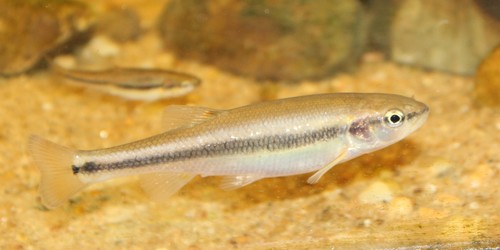
Creek Chub
Semotilus atromaculatus
The Creek Chub is a charismatic and industrious architect of the stream bed, known for building stone nests and dominating small waterways across North America.
Quick Identification
Size
Typically 2–6 inches (5–15 cm), though large adults can reach 12 inches (30 cm) and weigh up to 12 ounces (340 g).
Colors
Olive-brown to dark green on the back, fading to silvery-white below. Features a dark horizontal stripe along the side and a distinct black spot at the base of the dorsal fin. Breeding males develop rosy tints and bumps called tubercles.
Key Features
- Prominent black spot at the base of the dorsal fin
- Dark lateral line running from snout to tail
- Large, terminal mouth for its body size
- Small, often inconspicuous barbel at the corner of the mouth
When You’ll See Them
Geographic range
Where Does the Creek Chub Live?
The Creek Chub is a native North American species with a vast range that stretches across the eastern and central regions of the continent. It is found from the Rocky Mountains in the west all the way to the Atlantic coast, and from the southern reaches of Canada down through the Gulf Coast states. While it is most concentrated in the Midwest and the Northeast United States, it has been introduced to some western drainage basins where it continues to thrive in diverse water conditions.
Basemap © OpenStreetMap contributors
Behavior
The Creek Chub is a hardy and spirited inhabitant of freshwater streams, often serving as the dominant species in small headwater environments. They are known for their inquisitive nature and are frequently the first fish to investigate any disturbance in the water. While they are social and often found in small schools, they are also highly competitive, especially when food is involved. Their swimming style is energetic, darting quickly between rocks and vegetation to snap up prey or find cover.
During the spring spawning season, the behavior of the male Creek Chub becomes particularly fascinating. They are industrious "nest builders," using their mouths to carry stones and pebbles to create long ridges or pits in the stream bed. A single male will defend his nest vigorously against rivals, though other species like shiners often use these nests to lay their own eggs. Outside of breeding, they are generally peaceful toward humans but can be quite bold, sometimes nibbling on the toes of waders or following lures with surprising aggression.
EverydayEarth exclusive
Camera Tips
To capture high-quality footage of Creek Chubs, you will need a submersible action camera or a waterproof trail camera capable of being submerged in shallow water. Position your camera in a "run" or a "pool" area of a small stream where the water slows down just after a rocky riffle. Using a weighted mount or a heavy stone to anchor the camera against the current is essential to prevent it from washing away or vibrating, which can ruin the video quality.
For the best action, try the "bait bag" method. Place a small mesh bag filled with crushed crackers, bread, or cat food just upstream from the camera lens. The scent trail will draw Creek Chubs in from downstream, and their natural curiosity will keep them hovering right in front of your camera. Aim for a side-on angle to capture the distinct black spot on their dorsal fin and their shimmering lateral line.
Lighting is your biggest challenge underwater. Try to film on bright, sunny days between 10 AM and 2 PM when the sun is directly overhead to penetrate the water surface. If you are filming in a shaded forest stream, look for a "sun spot" where light breaks through the canopy and place your camera there. In the spring (April to June), focus your camera on gravelly areas where you see mounds of pebbles; this is where you will catch the dramatic nest-building and territorial displays of the males.
Similar Species
Species that look similar or are commonly confused with Creek Chub.
Fallfish
Much larger (up to 18 inches) with larger, more mirror-like scales and no black spot on the dorsal fin.
Hornyhead Chub
Lacks the black spot at the base of the dorsal fin and has a smaller mouth and different tail spot patterns.
Common Shiner
Has a much deeper, more compressed body and lacks the dark horizontal stripe typical of the Creek Chub.
Frequently Asked Questions
Record Creek Chub at your habitat
Connect a camera to start building your own species record — AI identifies every visitor automatically.