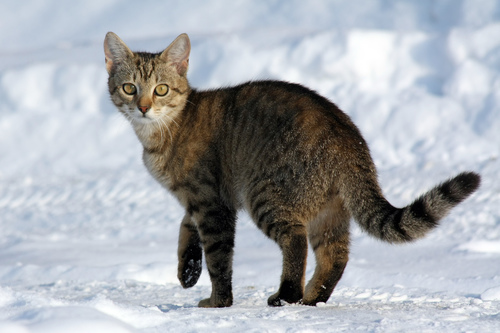
Domestic Cat
Felis catus
From graceful garden patrollers to fierce nocturnal hunters, domestic cats are the most common visitors to backyard cameras. Discover the secret lives of these feline neighbors as they navigate the human world with predatory precision.
Quick Identification
Size
Head-to-body length 46 cm (18 in); height 23–25 cm (9–10 in); weight 4–5 kg (9–11 lb)
Colors
Extremely varied including black, white, ginger, grey, and cream; patterns include tabby (stripes/swirls), calico, tortoiseshell, and tuxedo
Key Features
- Slender, flexible body with retractable claws
- Pointed ears and large eyes with vertical pupils
- Long, expressive tail used for balance
- Distinctive 'M' marking on the forehead of tabby patterns
When You’ll See Them
Sightings on EverydayEarth
Jul 25, 2026
A group of at least six White Rhinoceroses are resting and sleeping on the ground within a fenced enclosure. They remain mostly stationary throughout the clip, with only minor ear twitches and breathing movements visible. A small domestic cat is also curled up on the ground to the far left, resting near the rhinos.
Jul 18, 2026
Several White Rhinoceros are huddled together on the ground, sleeping deeply during the night. In the background, a domestic cat emerges from the left and walks across the enclosure behind the resting rhinos.
Jul 17, 2026
Under the cover of night, a group of white rhinoceroses is seen resting and sleeping huddled together beneath the branches of a tree. To the left, a domestic cat is curled up and resting peacefully on the ground.
Geographic range
Where Does the Domestic Cat Live?
The domestic cat is a truly global species, having followed human civilization from its early origins in the Near East and Africa to nearly every corner of the planet. Today, they are established on every continent except Antarctica, thriving in diverse environments ranging from bustling metropolitan centers to remote islands. In countries like the United States, China, and Brazil, they represent one of the most populous mammal species due to their dual roles as beloved household companions and successful feral survivors.
Basemap © OpenStreetMap contributors
Recorded on EverydayEarth
Behavior
Domestic cats are highly adaptable crepuscular predators that maintain a sophisticated balance between social interaction and solitary hunting. While they are famously independent, they utilize a complex language of vocalizations—such as meowing to humans and purring for contentment—alongside subtle body language like tail positioning and ear movement. In a backyard setting, they are territorial animals that spend much of their active time patrolling boundaries and scent-marking through cheek-rubbing or spraying.
As obligate carnivores, their hunting instinct remains sharp even in well-fed house pets. They use a 'sit-and-wait' or 'stalk-and-pounce' strategy, often spending long periods motionless while observing prey. Their movement is characterized by a direct-register gait, where the hind paws land almost exactly in the prints of the forepaws, allowing them to move silently across dry leaves or garden debris.
EverydayEarth exclusive
Camera Tips
To capture the best footage of domestic cats, place your camera at 'feline eye level'—roughly 10 to 15 inches off the ground. Cats are creatures of habit and typically follow linear features in the landscape. Aim your camera along the top of a fence, beside a garden hedge, or along the side of a shed. These are the natural highways they use to traverse their territory while staying close to cover.
Because cats are most active during the crepuscular hours of dawn and dusk, high-quality infrared (no-glow) sensors are essential. Standard white flashes can startle them and cause 'eye-glow' which washes out the face in photos. Set your camera to video mode with a 15–20 second duration. Cats often stop to sniff, listen, or mark their territory, and a longer clip will capture these fascinating social behaviors that a quick still photo would miss.
If you want to encourage a cat to linger in front of the lens, scent is often more effective than food. A small amount of dried catnip or silvervine placed on a rock or log can trigger playful rolling and rubbing behaviors. Unlike food, these scents are less likely to attract unwanted nocturnal scavengers like raccoons or opossums. Ensure the area directly in front of the camera is clear of tall grass, as cats prefer a clear path for stealthy movement and swaying weeds can cause hundreds of false triggers on your SD card.
Similar Species
Species that look similar or are commonly confused with Domestic Cat.
Frequently Asked Questions
Record Domestic Cat at your habitat
Connect a camera to start building your own species record — AI identifies every visitor automatically.