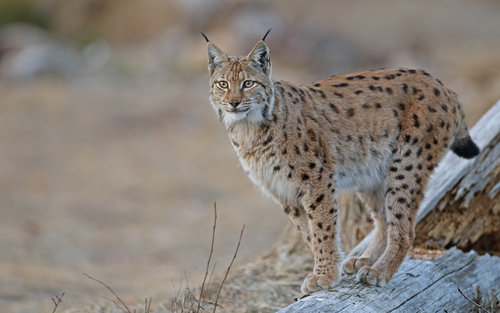
Eurasian Lynx
Lynx lynx
The Eurasian Lynx is Europe's largest wild cat, a silent shadow with iconic ear tufts and paws designed for the deep snow. This elusive 'ghost of the forest' is the ultimate prize for any wildlife enthusiast's trail camera.
Quick Identification
Size
Length: 80–130 cm (31–51 in); Shoulder Height: 60–75 cm (24–30 in); Weight: 18–36 kg (40–80 lb)
Colors
Tawny to grayish-brown coat often marked with black spots or rosettes; white underparts; distinctive black ear tufts and a black-tipped tail.
Key Features
- Long black ear tufts up to 4cm
- Large, furred 'snowshoe' paws
- Short bobbed tail with a solid black tip
- Prominent facial ruff or 'beard'
When You’ll See Them
Geographic range
Where Does the Eurasian Lynx Live?
The Eurasian Lynx claims the largest range of any wild cat species, spanning the vast wilderness of Europe and Northern Asia. From the dense taiga of Siberia and the Tibetan Plateau to the localized populations in the Alps and Carpathians, these cats thrive in remote, forested regions. While once widespread across the continent, today they are most common in Russia, Scandinavia, and Eastern Europe, with growing numbers in Central Europe due to successful reintroduction efforts.
Basemap © OpenStreetMap contributors
Behavior
The Eurasian Lynx is a solitary and highly elusive predator, known for its exceptional stealth and mastery of the forest. They are territorial animals, with males maintaining large home ranges that may overlap with several females. While they are famously difficult to spot, they are not strictly nocturnal; they typically follow a crepuscular rhythm, becoming most active as the sun rises and sets to coincide with the movements of their prey.
In their social interactions, lynx rely heavily on scent marking and vocalizations, particularly during the mating season in late winter. They are generally wary of humans and will go to great lengths to avoid detection, making them one of the most challenging 'ghosts' of the forest to document. Unlike many other cats, they are strong swimmers and capable climbers, though they spend the vast majority of their time on the ground hunting.
EverydayEarth exclusive
Camera Tips
To capture a Eurasian Lynx on camera, you must think like a cat that values efficiency and stealth. They prefer traveling along 'lines of least resistance'—look for forest tracks, ridgelines, or narrow passages through rocky terrain. These cats are creatures of habit and will often use the same mountain passes or fallen log bridges for years. Set your camera at 'lynx height,' approximately 50 to 60 centimeters (20-24 inches) off the ground, and angle it slightly upward if you are on a slope.
Scent is your best ally for attracting a lynx without providing food that might draw in unwanted scavengers. A small amount of valerian root extract or even high-quality catnip rubbed onto a nearby scratching post or tree trunk can pique their curiosity, often causing them to linger and rub against the surface, providing excellent video footage. Avoid using meat-based baits, as these often attract foxes or martens which may trigger the camera repeatedly and drain the battery before the lynx arrives.
Since lynx are most active during the low-light hours of dawn and dusk, ensure your camera has high-quality IR (Infrared) flash capabilities and a very fast trigger speed—under 0.3 seconds is ideal. Because they are solitary and cover huge territories, a 'hit' might only happen once every few months. Use high-capacity SD cards and long-life lithium batteries so your camera can stay in the field for long stretches. In winter, the tracks in the snow will tell you exactly where to place your unit for the best chance of success.
Similar Species
Species that look similar or are commonly confused with Eurasian Lynx.
Iberian Lynx
Smaller and more heavily spotted, the Iberian Lynx is found only in Spain and Portugal and has a more prominent 'beard'.
Canada Lynx
Native to North America, it has even larger feet for snow travel and a tail that is completely black at the tip rather than just the top half.
Bobcat
Much smaller with shorter ear tufts and a tail that is white on the underside of the tip, found only in North America.
Frequently Asked Questions
Record Eurasian Lynx at your habitat
Connect a camera to start building your own species record — AI identifies every visitor automatically.