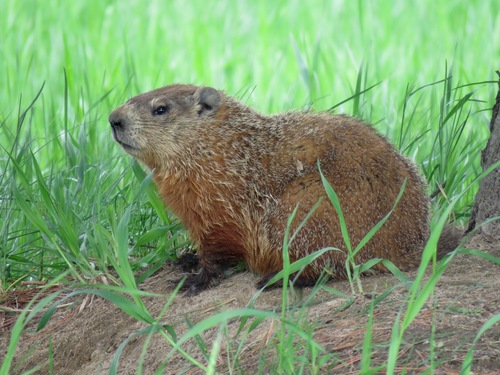
Groundhog
Marmota monax
Meet the 'whistle-pig' of the backyard, a master excavator and the world's most famous weather-predicting rodent. Whether they're sunning themselves on a log or munching on your prize clover, groundhogs bring a touch of the wild to suburban life.
Quick Identification
Size
40–65 cm (16–26 in) in length; weighs between 2–6 kg (4–13 lbs)
Colors
Grizzled brownish-gray fur with a frosted appearance; dark brown or black feet and a short, furry tail.
Key Features
- Stocky, low-slung body with powerful digging claws
- Short, bushy tail and small, rounded ears
- Grizzled gray-brown coat with dark brown feet
- Prominent, chisel-like front teeth
When You’ll See Them
Sightings on EverydayEarth
Jul 31, 2026
A woodchuck emerges from the right side of the frame and waddles across the dirt clearing. It pauses briefly to sniff at the ground before continuing its trek toward the thicker vegetation on the left.
Geographic range
Where Does the Groundhog Live?
Native to the North American continent, the groundhog boasts one of the widest distributions of any large rodent. Their core range extends from the Eastern United States across the great plains of Canada, stretching all the way north into the interior of Alaska. While they are lowland specialists, you will find them thriving everywhere from rural farmland to the manicured lawns of leafy suburban neighborhoods across the mid-Atlantic and New England regions.
Basemap © OpenStreetMap contributors
Behavior
Groundhogs are the ultimate architects of the backyard, spending much of their lives engineering complex underground tunnel systems that can span up to 66 feet in length. These diurnal rodents are most active during the warmer months, as they are true hibernators that vanish into their deep burrows from late fall until early spring to survive the winter freeze. While they appear slow and waddling on the ground, they are surprisingly capable of climbing trees to reach fruit or escape predators, and they are proficient swimmers when the need arises.
Socially, groundhogs are largely solitary creatures, coming together primarily to mate in the early spring shortly after emerging from hibernation. They are highly vigilant and have a signature habit of standing perfectly upright on their hind legs to scan the horizon for predators like coyotes, foxes, or hawks. They earned the nickname "whistle-pig" for the piercing, high-pitched alarm call they emit to warn other groundhogs of approaching danger. In suburban settings, they are often seen as garden pests, but they play a vital role in soil aeration and providing habitat for other species that move into their abandoned tunnels.
EverydayEarth exclusive
Camera Tips
To capture high-quality groundhog footage, the secret lies in burrow discovery. Scout the edges of your property where the lawn meets denser brush or check near the foundations of sheds, decks, and stone walls. Look for a 6- to 10-inch wide hole with a large mound of fresh dirt at the entrance. Mount your camera approximately 12 to 18 inches off the ground, angled slightly downward toward the entrance. Placing it about 5 to 8 feet away ensures you capture the animal's full body as it emerges to sunbathe or scan for predators.
Groundhogs are most active during the early morning and late afternoon, so ensure your camera is set to record during these peak daylight hours. High-speed triggers are essential because, while they look slow, groundhogs can duck back into their holes in a heartbeat if they sense movement. If you're looking for specific behaviors, try to catch them in early spring (March or April) when they are most active searching for mates and fresh greens after their long winter sleep. This is also when you're most likely to see multiple individuals interacting.
While we don't recommend baiting near your home's foundation to avoid encouraging digging, a few slices of fresh cantaloupe, apple, or a handful of clover placed in an open area can encourage a groundhog to linger in front of the lens. Use "Photo + Video" mode if your camera supports it; groundhogs often stand perfectly still on their hind legs to look around, which makes for a majestic portrait, followed by comical waddling videos as they move to the next patch of grass. Ensure your camera's PIR sensitivity is set to 'High' since their fur can sometimes blend in with the thermal background of the soil.
Similar Species
Species that look similar or are commonly confused with Groundhog.
Frequently Asked Questions
Record Groundhog at your habitat
Connect a camera to start building your own species record — AI identifies every visitor automatically.