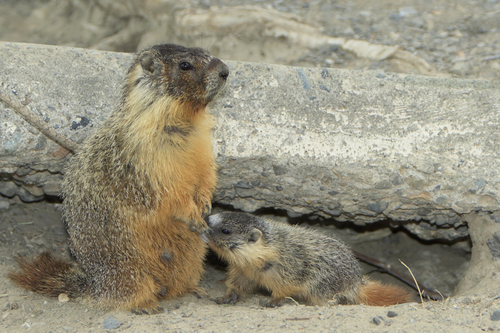
Yellow-bellied Marmot
Marmota flaviventris
The charismatic 'whistle-pig' of the peaks, the yellow-bellied marmot is the ultimate mountain sentinel. Known for their golden chests and love for sunbathing on rocky outcrops, these social squirrels are a highlight of high-altitude wildlife watching.
Quick Identification
Size
Length: 47–70 cm (18.5–27.5 in); Weight: 1.5–5 kg (3.3–11 lbs)
Colors
Grizzled brown upper fur, distinct yellowish-orange chest and belly, dark tail, and a small white patch of fur between the eyes.
Key Features
- Yellowish-orange fur on chest and belly
- White patch of fur between the eyes
- Large, bushy dark brown tail
- Stocky build with short, powerful legs for digging
When You’ll See Them
Behavior
The yellow-bellied marmot is a highly social and vocal ground squirrel, often referred to by hikers as the 'whistle-pig' due to the high-pitched alarm calls it uses to warn its colony of predators. They live in complex social structures typically consisting of one dominant male and a harem of several breeding females and their offspring. You will most often see them during the summer months perched atop large 'sentry rocks,' where they spend hours sunning themselves while keeping a sharp eye out for eagles, coyotes, and foxes.
These animals are master hibernators, spending up to eight months of the year in a deep sleep underground. Because of this, their summer behavior is characterized by intense foraging. They are incredibly industrious when it comes to building fat reserves, sometimes doubling their body weight between spring and late summer. While they are generally wary of humans, marmots living near campgrounds or mountain trailheads can become habituated, occasionally investigating gear or even the undersides of vehicles for salt deposits.
EverydayEarth exclusive
Camera Tips
To capture the best footage of a yellow-bellied marmot, you need to identify their 'lookout' rocks. These are usually the largest, highest boulders in a rock pile that offer a clear view of the surrounding meadow. Look for rocks that appear smoothed down or have concentrated dark droppings on them. Mount your camera on a weighted tripod or a nearby low-lying branch about 12 to 18 inches off the ground. Angling the camera slightly upward toward the top of the rock will give you that classic 'king of the mountain' profile shot as they stand on their hind legs.
Because marmots are most active in the morning and late afternoon, position your camera to avoid direct east-west sun glare which can trigger the sensor falsely or wash out the golden tones of their belly fur. If you are setting up in a windy mountain environment, ensure your camera is extremely secure; marmots are curious and have been known to chew on nylon straps or nudge equipment that enters their territory. A fast trigger speed is vital, as they can duck into a rocky crevice in a heartbeat if they detect a shadow or a strange sound.
While traditional bait is unnecessary and often discouraged, placing your camera near a colony's main burrow entrance—distinguished by a large mound of excavated dirt near a rock—is a foolproof strategy. During the peak of summer, they are very active and will pass by these entrances multiple times a day. If you are using an AI-powered camera, set your detection zones to the top of the basking rock and the burrow mouth to capture high-quality social interactions and grooming behaviors that occur in these communal spots.
Similar Species
Species that look similar or are commonly confused with Yellow-bellied Marmot.
Frequently Asked Questions
Record Yellow-bellied Marmot at your habitat
Connect a camera to start building your own species record — AI identifies every visitor automatically.