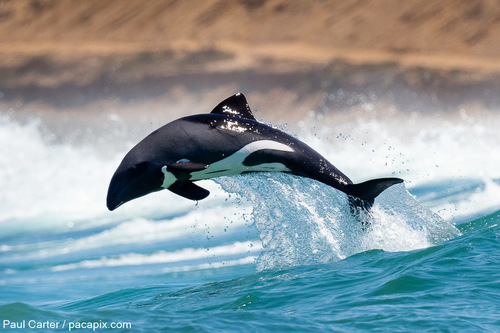
Heaviside's Dolphin
Cephalorhynchus heavisidii
The Heaviside's Dolphin is a rare, small cetacean found only in the cold waters of southwest Africa. Known for its playful spirit and striking 'panda-like' colors, it is a crown jewel of the Benguela Current.
Quick Identification
Size
Grows up to 1.7 metres (5.6 feet) in length and weighs between 60 to 75 kilograms (132 to 165 lbs).
Colors
Dark slate-grey to black upper body with a white belly and a distinctive white trident-shaped patch extending up the flanks.
Key Features
- Small, stocky build with a blunt head and no beak
- Prominent triangular dorsal fin
- Striking bi-colored grey and white pattern
- Energetic vertical leaps often ending in a splash
When You’ll See Them
Geographic range
Where Does the Heaviside's Dolphin Live?
Native to the African continent, the Heaviside's Dolphin is found exclusively along the southwest coast. Its core range is defined by the cold, nutrient-rich waters of the Benguela Current, stretching from the southern coast of Angola through the entire Namibian coastline and down to the Western Cape of South Africa. As a coastal specialist, it is rarely found in deep oceanic waters, preferring the narrow strip of the continental shelf.
Basemap © OpenStreetMap contributors
Behavior
Heaviside's Dolphins are remarkably social and energetic animals, often seen in small pods of two to ten individuals. They are famous for their unique aerial acrobatics, which include high vertical leaps and side-flips. While they can be wary of large, fast-moving commercial vessels, they are surprisingly social with smaller boats and are known to surf the waves generated by the cold Benguela winds or bow-ride slower watercraft.
These dolphins exhibit a clear daily rhythm; they generally spend their daylight hours in shallow, near-shore waters resting, socializing, and avoiding predators like Great White Sharks. Feeding typically occurs at night when their prey moves from the deep sea toward the surface. They show high site fidelity, meaning specific pods often frequent the same small stretches of coastline for years, making them reliable subjects for coastal observers.
EverydayEarth exclusive
Camera Tips
Capturing a Heaviside's Dolphin requires a specialized setup if your property overlooks the Atlantic. Mount your AI-powered camera on a high vantage point such as a balcony, rooftop, or a sturdy pier post to get a clear view over the surf. Use a high-resolution sensor to allow for digital cropping, as these dolphins often stay just beyond the breaking waves. A fixed camera angle slightly downward toward the water is best, but be sure to position it to minimize the direct reflection of the sun during your peak observation hours.
Since these dolphins are most active in the near-shore zone during the morning and late afternoon, ensure your camera's motion triggers are optimized for these times. The single most important accessory for a coastal camera is a circular polarizing filter; this cuts through the ocean's surface glare and haze, allowing the AI to better distinguish the dark, triangular fins of the dolphins from the surrounding water. Set your camera to a fast shutter speed (at least 1/1000s) to freeze the action of their rapid leaps and splashes.
While you cannot use bait to attract dolphins, you can improve your capture rate by positioning cameras near natural features like the edges of kelp forests or rocky points where the current concentrates fish. In regions like the Western Cape or Namibia, they are frequently seen in calm bays during high tide. If your AI camera supports scheduling, focus your recording windows during incoming tides when the dolphins are most likely to follow prey closer to the beach.
Similar Species
Species that look similar or are commonly confused with Heaviside's Dolphin.
Frequently Asked Questions
Record Heaviside's Dolphin at your habitat
Connect a camera to start building your own species record — AI identifies every visitor automatically.