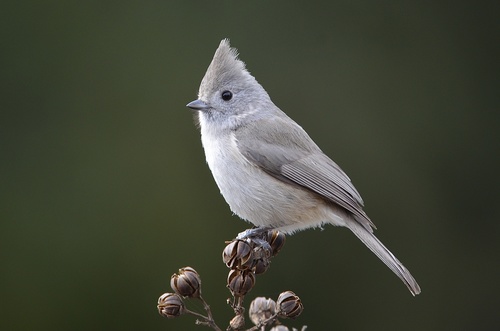
Oak Titmouse
Baeolophus inornatus
The spirited Oak Titmouse is a master of the oak canopy, recognized by its perky crest and inquisitive nature. A permanent resident of the West Coast, this charming bird is a favorite for backyard birders and camera enthusiasts alike.
Quick Identification
Size
Length: 5.1–5.9 in (13–15 cm); Wingspan: 8.7 in (22 cm); Weight: 0.5–0.6 oz (14–18 g)
Colors
Overall plain brownish-gray; slightly paler gray on the underparts; dark eyes and a short, stout black bill. Males and females look identical.
Key Features
- Short, pointed crest on the head
- Uniformly drab gray-brown plumage
- Large, dark, intelligent-looking eyes
- Stout, stubby bill used for cracking seeds
When You’ll See Them
Behavior
The Oak Titmouse is an energetic and vocal little bird that brings a sense of personality to the oak woodlands of the West. They are incredibly acrobatic, often seen hanging upside down from outer tree branches to inspect the undersides of leaves for insects. Unlike many songbirds that migrate, these titmice are permanent residents, often spending their entire lives within a small territory where they know every nook and cranny.
These birds are known for their social intelligence and are often the 'sentinels' of the backyard. They use a variety of sharp, rasping calls to alert other birds to the presence of hawks or cats. While they are fiercely territorial during the spring nesting season, they frequently join mixed-species foraging flocks in the winter, acting as unofficial leaders for nuthatches and kinglets. Their pair bonds are strong, and you will almost always see a male and female moving through the trees together.
EverydayEarth exclusive
Camera Tips
To capture the Oak Titmouse on your backyard camera, focus on their preferred foraging heights. These birds are most comfortable in the middle to upper canopy, but they will readily descend to eye-level feeders. Mount your camera about 5 to 6 feet high, ideally on a post or tree trunk within 10 feet of a large oak or similar evergreen tree. They are nervous in wide-open spaces, so providing a 'staging' branch—a natural-looking perch a few feet away from your feeder—will give them a place to land and pose before they dive in for a seed.
When it comes to lures, black oil sunflower seeds and suet are the gold standards for this species. Titmice are 'strike and fade' feeders; they rarely sit at a feeder to eat. Instead, they grab a single seed and fly to a nearby branch to crack it open. To get the best video, set your camera to a short 10-15 second clip with a very fast trigger speed. Because their movements are so rapid and jerky, a high frame rate setting will help you capture the moment they flared their crest or hammered a seed without motion blur.
Don't overlook the power of water, especially in the arid climates of California and Oregon. A birdbath with a small solar fountain or a dripper is an irresistible magnet for Oak Titmice. The sound of moving water can draw them down even if they aren't hungry. Position your camera to face the edge of the water basin where they land. In the winter months, when food is scarce, keep your suet feeders full; this is when you'll get your most consistent 'hero shots' as they spend a bit more time at the camera station to fuel up against the cold.
Similar Species
Species that look similar or are commonly confused with Oak Titmouse.
Juniper Titmouse
Nearly identical but found in drier, interior pinyon-juniper habitats; has a different, scratchier song.
Tufted Titmouse
Found in the Eastern US; has a white belly, gray back, and a distinct black patch on the forehead just above the bill.
Bushtit
Much smaller with a longer tail and no crest; usually travels in large, fast-moving social groups rather than pairs.
Frequently Asked Questions
Record Oak Titmouse at your habitat
Connect a camera to start building your own species record — AI identifies every visitor automatically.