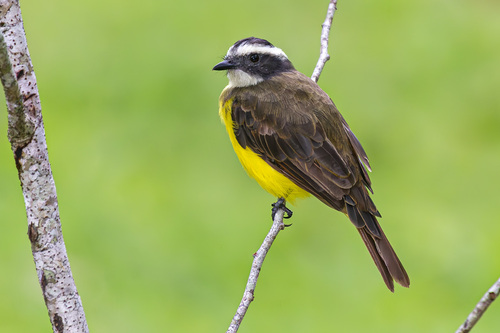
Rusty-margined Flycatcher
Myiozetetes cayanensis
With its bold white eyebrows and vibrant yellow belly, the Rusty-margined Flycatcher is a lively addition to any tropical backyard. Keep an eye on the wings—the subtle rufous edges are the secret to identifying this charismatic aerial acrobat.
Quick Identification
Size
6.3–7.1 inches (16–18 cm) in length; weighs approximately 0.7–1.0 oz (20–28 g)
Colors
Olive-brown upperparts with distinct rufous/rusty edges on wing feathers; bright yellow underparts; white throat; black head with a bold white stripe (supercilium) above the eye.
Key Features
- Rufous-edged wing feathers on primaries and secondaries
- Broad white eyebrow stripe and black eye mask
- Clean white throat contrasting with bright yellow belly
- Chunky build with a relatively short, flat bill
When You’ll See Them
Behavior
The Rusty-margined Flycatcher is a spirited and social bird, often seen in pairs or small family groups rather than alone. Unlike some of its more reclusive relatives, this flycatcher is quite comfortable around human-altered landscapes, frequently perching on fence lines, telephone wires, or the outer branches of garden trees. They are incredibly vocal, often announcing their presence with a series of shrill, rhythmic whistles that can be heard throughout the day, especially when they are defending their territory or greeting a mate.
While they are primarily insectivores, they are versatile foragers. You'll often see them performing "sallying" flights—darting out from a perch to snatch a flying insect mid-air before returning to the same spot. They are also known to hover briefly to pick insects off leaves or visit fruiting trees for a sugary snack. Interestingly, they are quite bold and will often chase away much larger birds that venture too close to their nesting sites.
EverydayEarth exclusive
Camera Tips
To capture the best footage of a Rusty-margined Flycatcher, placement is everything. These birds love "sentinel perches"—exposed branches, fence posts, or railings that give them a clear view of the surrounding air space for hunting. Position your AI-powered camera 5 to 8 feet off the ground, angled toward an open perch near a fruiting tree or a water feature. Because they are active hunters, a side-profile angle is best to catch the distinctive rusty wing edges that separate them from common look-alikes like the Social Flycatcher.
Since these flycatchers are attracted to movement and water, a bubbling birdbath or a small fountain is an excellent lure. Position the camera about 3-4 feet away from the water source to ensure the AI can trigger on the bird's quick movements as it bathes or drinks. If you're using a trail camera in a more natural setting, look for "light gaps" in the canopy or forest edges where sunlight hits the foliage, as these areas attract the flying insects the birds prey upon. They are also very fond of trees like the Cecropia, which provide both fruit and insect life.
High-speed trigger settings are crucial for this species. These birds move with incredible speed when sallying for insects. Set your camera to take a burst of 3-5 photos or a short 10-20 second video clip to ensure you catch the moment they land or take off. If you are lucky enough to have them nesting nearby, look for their large, messy-looking domed nests made of grass and twigs. Placing a camera at a respectful distance (at least 15-20 feet) from a nest site can provide fascinating glimpses into their social lives, but always prioritize the bird's safety and do not disturb the breeding pair.
Lighting is your best friend for a positive identification. To clearly see the "rusty" margins on their wings, you need good natural light. South-facing camera placements often provide the best illumination throughout the day in their tropical range. If your camera allows for shutter speed adjustments, keep it fast to minimize motion blur during their frequent tail-flicking displays and sudden aerial maneuvers. Early morning light is particularly effective at highlighting the yellow of the breast and the contrast of the head markings.
Similar Species
Species that look similar or are commonly confused with Rusty-margined Flycatcher.
Frequently Asked Questions
Record Rusty-margined Flycatcher at your habitat
Connect a camera to start building your own species record — AI identifies every visitor automatically.