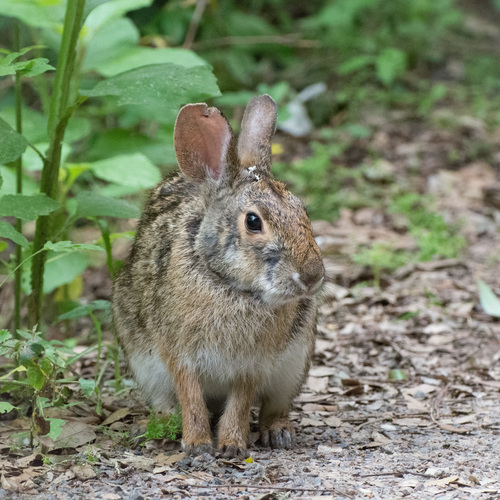
Swamp Rabbit
Sylvilagus aquaticus
The largest of the cottontails, the Swamp Rabbit is a true semi-aquatic marvel of the Southern wetlands. Known for its 'Cane Cutter' nickname and its ability to swim with ease, this elusive mammal is a prize find for any backyard wildlife enthusiast.
Quick Identification
Size
Length: 17–21 inches (45–55 cm); Weight: 3.5–6 lbs (1.6–2.7 kg)
Colors
Mottled rusty-brown to blackish upper fur with a white underside; features a distinct cinnamon-colored ring around the eyes and noticeable orange or rufous coloring on the hind feet.
Key Features
- Largest species of cottontail rabbit
- Distinctive orange-tinted hind legs and feet
- Small, rounded ears relative to body size
- Cinnamon-colored eye-rings and a white tail underside
When You’ll See Them
Behavior
The Swamp Rabbit is a powerhouse of the wetlands, known for its surprising swimming ability and territorial nature. Unlike most rabbits that flee into upland brush, the 'Cane Cutter' often seeks refuge in the water, paddling with ease to escape predators or reach feeding grounds on small islands. They are highly territorial, and dominant males use scent glands under their chins to mark logs and branches throughout their home range.
These rabbits are primarily nocturnal but are frequently active during the twilight hours of dawn and dusk. They lead a largely solitary life outside of the breeding season. One of their most fascinating survival tactics is their ability to remain perfectly still in dense brush or under hollow logs, relying on their mottled camouflage to blend into the shadows of the swamp floor until a threat is nearly on top of them.
EverydayEarth exclusive
Camera Tips
Capturing the Swamp Rabbit on camera requires a focus on 'edge' habitats where the water meets the woods. Look for downed logs near the water's edge, as these are favorite spots for 'latrines'—areas where rabbits repeatedly defecate and mark territory. Placing your camera 12 to 18 inches off the ground, angled slightly downward toward these logs or clearings in cane thickets, will provide the best framing for this low-profile mammal.
Because they are most active in low-light conditions, ensure your camera has a high-quality infrared (IR) flash to avoid overexposing their white undersides while maintaining sharp detail on their mottled fur. Set your camera to a multi-shot burst or a 10-second video clip; Swamp Rabbits often pause to sniff the air or groom, providing excellent still-frame opportunities that a single shot might miss. Using video can also capture their unique swimming behavior if the camera is positioned near a narrow crossing point in a swamp.
While traditional rabbit baits like apples or carrots can work, the best 'lure' for a Swamp Rabbit is natural cover. If you have a backyard bordering a wetland, creating a small brush pile near a water source will naturally draw them in. In the winter, they are more likely to investigate supplemental food sources, making this the ideal time to use scented lures or fresh greens to pull them into the camera's field of view.
Don't forget to check your camera settings for trigger speed. Swamp Rabbits can move with surprising speed when crossing open ground. A trigger speed of 0.5 seconds or faster is recommended. If your camera is placed near a known 'form' (a shallow depression in the grass where they rest), use a time-lapse mode during the twilight hours to catch them emerging for their nightly forage without needing to trigger the PIR sensor every time.
Similar Species
Species that look similar or are commonly confused with Swamp Rabbit.
Frequently Asked Questions
Record Swamp Rabbit at your habitat
Connect a camera to start building your own species record — AI identifies every visitor automatically.