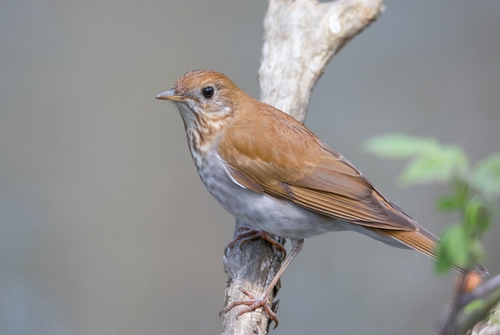
Veery
Catharus fuscescens
The ghost of the forest floor, the Veery is a master of camouflage with a haunting, ethereal song. Discover this shy, cinnamon-colored thrush as it dances through the shadows of your backyard's quietest corners.
Quick Identification
Size
Length: 16–19 cm (6.3–7.5 in); Wingspan: 28.5–30.5 cm (11.2–12 in); Weight: 28–54 g (1.0–1.9 oz)
Colors
Upperparts are a distinctive warm cinnamon-brown or tawny color. The underparts are mostly white with a buffy throat and breast featuring faint, blurry brownish spots.
Key Features
- Uniform cinnamon-brown or tawny upperparts
- Faint, indistinct spotting on a buffy breast
- Indistinct pale eye-ring
- Long, pinkish or slate-grey legs and a slender build
When You’ll See Them
Behavior
The Veery is a secretive and somewhat shy member of the thrush family, most often found foraging through leaf litter on the forest floor. They move with a characteristic series of hops and pauses, tossing leaves aside with their beaks to uncover hidden invertebrates. While they are territorial during the breeding season, they are generally elusive and prefer to stay within the shadows of dense undergrowth, making them more often heard than seen.
Their most famous attribute is their ethereal, flute-like song that spirals downward in pitch. Interestingly, Veeries are known for their sensitivity to weather patterns; research suggests they may even predict the severity of hurricane seasons based on their nesting cycles. While they aren't common visitors to traditional hanging bird feeders, they will occasionally venture into quiet, wooded backyards that offer plenty of natural cover and water features.
EverydayEarth exclusive
Camera Tips
To capture high-quality footage of a Veery, ground-level placement is essential. These birds spend the vast majority of their time hopping through the leaf litter. Position your camera about 6 to 12 inches off the ground, angled slightly upward, near a patch of damp soil or under thick ferns. Because they are shy, use a camera with a high-quality PIR sensor that can trigger quickly when it detects movement in the shadows.
Water is the ultimate lure for the Veery. They are highly attracted to moving water in shaded areas. If you have a backyard stream or a birdbath with a dripper located near cover, aim your camera there. They prefer to bathe in the early morning or late evening when the light is low, so ensure your camera has excellent low-light performance or a no-glow infrared flash to avoid startling them during these twilight hours.
In terms of bait, the Veery won't usually visit a seed tray. Instead, focus on creating a 'natural' attractant by maintaining a pile of decomposing leaves or mulch. This creates a buffet of insects that will keep the bird in the camera's frame for longer as it forages. If you are using a feeder, a ground-level tray with live mealworms or soaked raisins is your best bet for bringing them into view.
Set your camera to video mode with a 15-20 second duration. The Veery's movements are quick and twitchy, so a still photo might only catch a blur or a tail feather. Seeing them toss leaves or take a vigorous bath provides a much better record of their unique personality. During the peak of spring migration in May, check your camera daily, as these birds often move through suburban woodlots quickly on their way to deeper forests.
Similar Species
Species that look similar or are commonly confused with Veery.
Wood Thrush
Much bolder, darker spots on the breast and a more contrasting reddish-brown head compared to the Veery's uniform tawny back.
Hermit Thrush
Features a distinctly reddish tail that contrasts with a duller brown back, and has a more prominent white eye-ring.
Swainson's Thrush
Lacks the cinnamon/tawny coloring of the Veery, appearing more olive-brown with very distinct buffy 'spectacles' around the eyes.
Frequently Asked Questions
Record Veery at your habitat
Connect a camera to start building your own species record — AI identifies every visitor automatically.