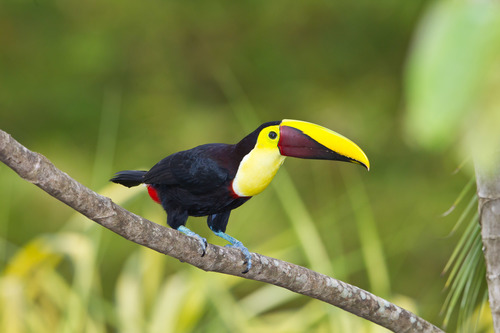
Yellow-throated Toucan
Ramphastos ambiguus
The largest toucan in Central America, this vocal giant is easily recognized by its massive yellow-and-maroon bill and its iconic 'Dios-te-dé' call echoing through the canopy.
Quick Identification
Size
Length of 18.5 to 24 inches (47–61 cm); weight ranging from 1.3 to 1.6 lbs (580–750 g).
Colors
Large black body; bright yellow bib on the face and throat; bill is diagonally split with bright yellow on top and deep maroon or chestnut below.
Key Features
- Massive bicolored bill (yellow upper, maroon lower)
- Bright yellow bib extending to the upper breast
- Large black body with crimson feathers under the tail
- Pale blue or green skin patch surrounding the eye
When You’ll See Them
Behavior
While they spend the majority of their time high in the trees, they are known to descend to lower levels to follow army ant swarms or visit backyard fruit feeders. These birds are intelligent and curious, often tilting their heads to inspect new objects or potential threats. During the breeding season, they are cavity nesters, taking over old woodpecker holes or natural hollows in large, decaying trees. They are vital to their ecosystem as 'farmers of the forest,' dispersing the seeds of the many fruits they consume across long distances.
EverydayEarth exclusive
Camera Tips
Baiting is the most effective way to bring these birds within range of your lens. They are particularly attracted to bright, fleshy fruits like overripe bananas, halved papayas, or chunks of melon. Secure a flat wooden platform to a sturdy branch and use a small amount of wire or non-toxic adhesive to keep the fruit in place so the toucans don't fly off with the whole piece immediately. This encourages them to stay in the frame while they use their serrated bills to peel or slice the fruit.
Lighting is critical for identifying this species. Position your camera facing north or south to avoid the harsh glare of the tropical sun, which can wash out the brilliant yellow of their bib. If your camera has adjustable settings, use a high-speed burst mode. Toucans are famous for their 'bill-tossing' behavior, where they throw food into the air to catch it in their throat; a fast shutter speed is necessary to freeze this action. Lastly, be patient—it may take a week or more for a resident pair to trust a new camera setup in their territory, but once they do, they are likely to return to the same spot daily.
Similar Species
Species that look similar or are commonly confused with Yellow-throated Toucan.
Frequently Asked Questions
Record Yellow-throated Toucan at your habitat
Connect a camera to start building your own species record — AI identifies every visitor automatically.